Articles, newest first

Cluster-Randomised Experiments: When You Randomise Stores and Analyse Customers
Twenty stores are randomised, ten to each arm, and the 4,000 customers are compared with a t-test. With no true effect and only 5 percent of the outcome vari...
Read articleHow to Fine-Tune an LLM Without Fooling Yourself
Fine-tuning an LLM is easy to start and surprisingly easy to do badly. The difficult parts are defining the behaviour to change, constructing the dataset, pr...
Read article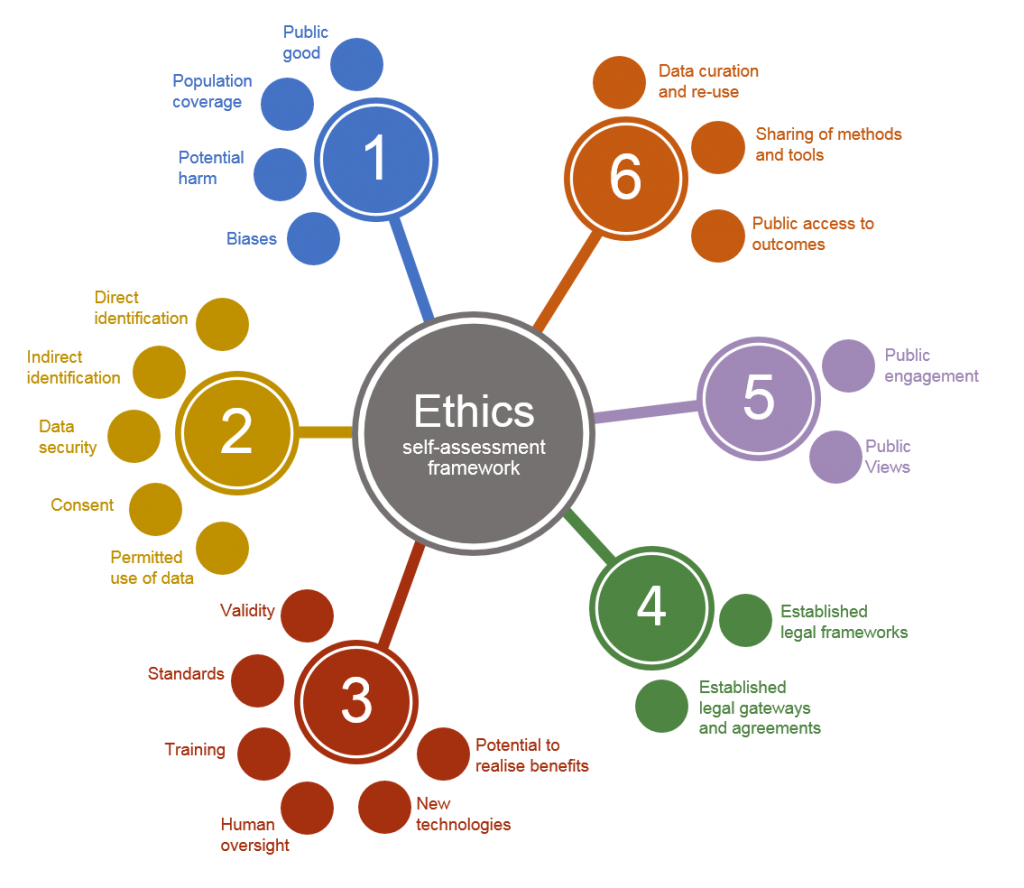
Data Drift and Fairness: Monitoring Equity When Populations Change
A fair model at launch can become unfair in production when populations, behavior, policies, or measurement systems change.
Read article
Dopamine Is Not a Fuel Tank: Reward, Habit and the Myth of the Dopamine Reset
Dopamine is not a reserve of pleasure that modern life depletes. It participates in motivation, learning, salience and reward prediction. Taking a break from...
Read article
Negative Controls: Measuring an Effect That Cannot Exist
The comparison says adopters score 0.96 higher, and the truth is 0.30. Run the same comparison on an outcome the feature cannot possibly affect and it report...
Read article
Robust and Stochastic Optimization Answer Different Uncertainty Questions
Optimization under uncertainty is not one method. Expected-cost models, chance constraints, robust counterparts and distributionally robust models encode dif...
Read article
Equivalence Testing: Proving a Model Is No Worse
The cheaper model scores a non-significant p of 0.4 against the incumbent and is declared "no worse". With 50 test cases, a model that is truly 1.5 points wo...
Read article
Hawkes Processes Turn Events Into Causes of Future Events
A Poisson process assumes that an event does not change the future event rate. A Hawkes process makes the opposite mechanism explicit: each event can create ...
Read article
Preprocessing Inside the Fold: How Feature Selection Before Cross-Validation Invents Accuracy
One hundred samples, five thousand features, labels assigned by coin toss. Keep the ten features most correlated with the label, then cross-validate a logist...
Read article
A High Silhouette Score Does Not Mean Your Clusters Are Real
Silhouette width is a useful geometric diagnostic, but it does not test whether a population contains distinct latent groups. A single uniform distribution, ...
Read article