Topics
Operational models rarely fail because they produce a single wrong number. They fail because the organization treats uncertain predictions as if they were certain. Conformal prediction addresses this problem by wrapping a model with statistically calibrated uncertainty.
Instead of saying "this machine will fail in 14 days", a conformal system can say "with 90 percent coverage, failure is expected between 8 and 23 days." Instead of returning one diagnosis, it can return a set of plausible classes. That difference matters when the next action is expensive, risky, or irreversible.
The Core Idea
Conformal prediction uses a calibration set to estimate how wrong a model tends to be. It then converts future predictions into intervals or sets with a user-chosen coverage level.
The typical split conformal workflow is:
- Train a model on the training data.
- Predict on a held-out calibration set.
- Compute nonconformity scores, such as absolute residuals.
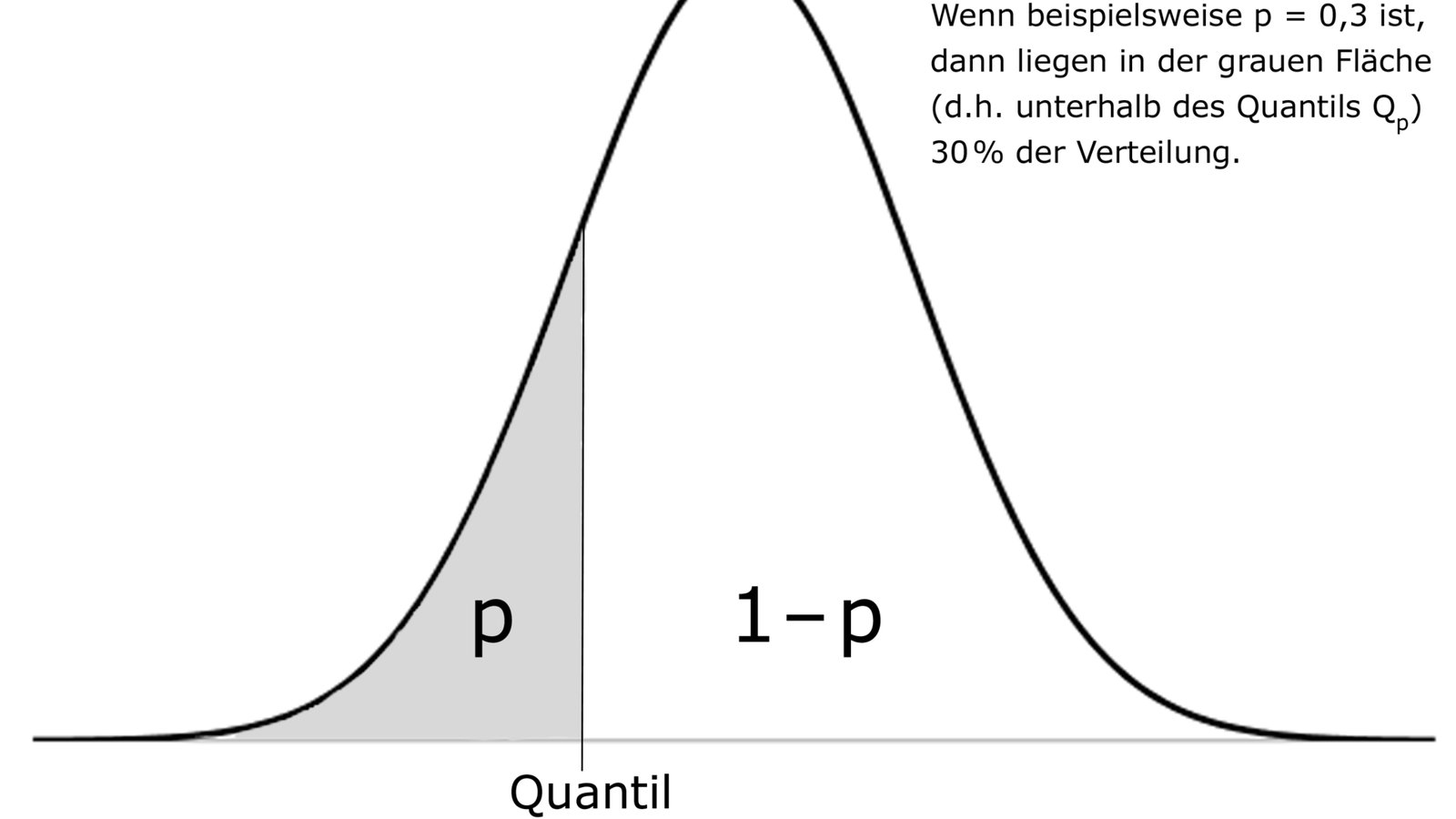
- Choose a quantile of those scores based on the desired coverage.
- Add that quantile around future predictions.
For regression, this produces prediction intervals. For classification, it produces prediction sets.
Why Coverage Is Operational
Coverage is the long-run proportion of true outcomes captured by the interval or set. A 90 percent conformal interval should contain the true value about 90 percent of the time under the exchangeability assumptions.
That makes uncertainty actionable:
| Use case | Model output | Operational decision |
|---|---|---|
| Predictive maintenance | remaining useful life interval | schedule inspection before the lower bound becomes critical |
| Healthcare triage | set of plausible risk categories | escalate when high-risk category remains in the set |
| Demand forecasting | calibrated demand interval | set safety stock from an upper quantile |
| Fraud detection | prediction set or risk band | route uncertain cases to manual review |
The interval is not decoration. It changes the decision rule.
Common Mistakes
Conformal prediction is simple, but it is not magic.
- Using a biased calibration set: coverage only helps if calibration data resembles deployment data.
- Ignoring time order: for time series, calibration windows should respect temporal structure.
- Reporting marginal coverage only: a model can have 90 percent overall coverage and poor coverage for a critical subgroup.
- Treating wide intervals as failure: wide intervals are useful if they reveal that the system lacks enough information to act confidently.
Conditional coverage is difficult to guarantee exactly, but subgroup coverage should still be monitored.
Choosing the Nonconformity Score
The nonconformity score defines what "surprising" means.
For regression:
- absolute residuals are simple and robust;
- normalized residuals help when error variance changes with the input;
- asymmetric scores are useful when underprediction and overprediction have different costs.
For classification:
- probability-threshold methods produce compact sets;
- adaptive methods can handle uncertain examples more gracefully;
- class-conditional calibration can improve behavior under imbalance.
The score should reflect the operational cost of being wrong.
Conclusion
Conformal prediction is valuable because it separates model building from uncertainty calibration. Teams can often wrap existing models with conformal intervals or sets without rebuilding the entire pipeline.
The practical discipline is to evaluate not only whether predictions are accurate, but whether the uncertainty is honest enough to support action. In operational risk, calibrated uncertainty is often the difference between a model that informs decisions and a model that creates hidden exposure.
References
- Vovk, V., Gammerman, A., & Shafer, G. (2005). Algorithmic Learning in a Random World. Springer.
- Angelopoulos, A. N., & Bates, S. (2021). A gentle introduction to conformal prediction and distribution-free uncertainty quantification.
- Romano, Y., Patterson, E., & Candes, E. (2019). Conformalized quantile regression. NeurIPS.
- Shafer, G., & Vovk, V. (2008). A tutorial on conformal prediction. Journal of Machine Learning Research, 9, 371-421.
Embed interactive plots, widgets, and demos using <figure>, <iframe>, or <div class="interactive-embed"> containers. Ensure each embed includes descriptive captions for accessibility.
How to cite
Use the quick export buttons to save citations for reference managers or copy the formatted text directly.
Diogo Ribeiro (2026). Conformal Prediction for Operational Risk Decisions. Faculty of Media Arts and Design, Technical University of Porto. https://diogoribeiro7.github.io/statistics/conformal_prediction_operational_risk/.