The mathematics section exists for foundations that help technical work survive contact with real problems: probability, optimization, graphs, stochastic processes, geometry and modelling.
Start here
- Why Math and Statistics Foundations Matter in Data Science
- Fourier Analysis for Data Science
- Information Geometry for Data Science
- Discrete Mathematics for Data Science
Applied foundations
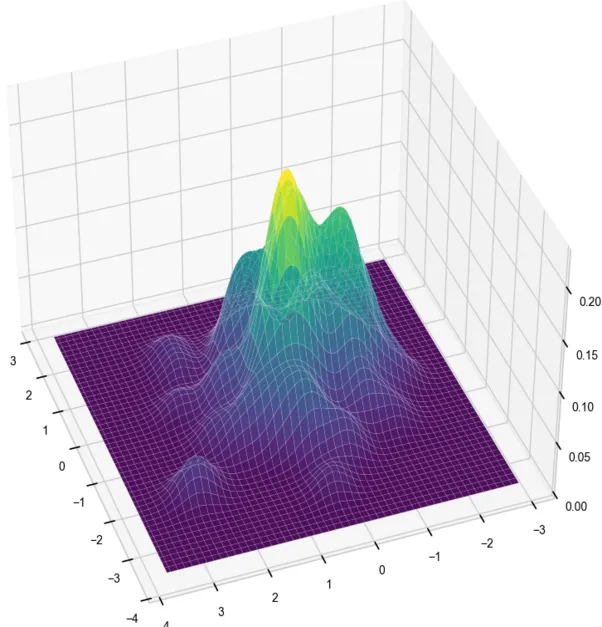
Information Geometry for Data Science: Curvature, Models, and Learning
Information geometry treats probability models as geometric objects, making it easier to reason about distance, curvature, uncertainty, and learning.
Read article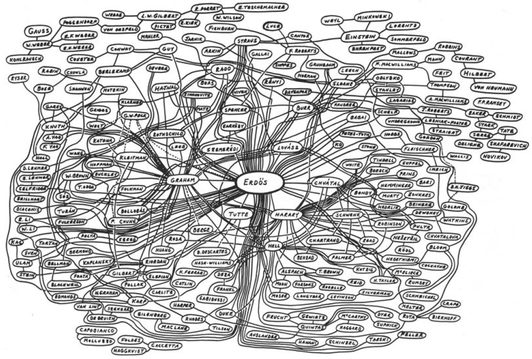
Discrete Mathematics for Data Science: States, Constraints, and Algorithms
Discrete mathematics is the part of mathematics that explains how data systems make decisions, count possibilities, represent relationships, and enforce cons...
Read article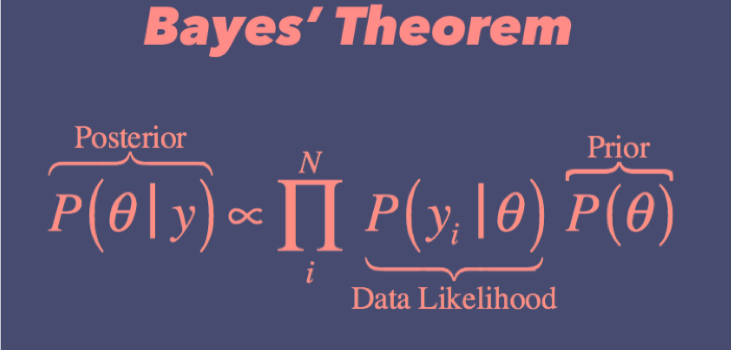
Bayesian Decision Theory for Data Science: From Uncertainty to Action
Bayesian decision theory connects statistical uncertainty to action by asking not only what is likely, but what decision is best under uncertainty.
Read article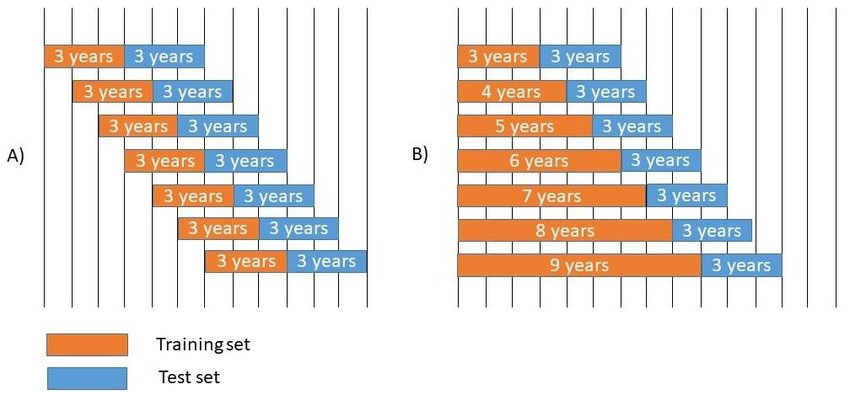
Fourier Analysis for Data Science: From Signals to Features
Fourier analysis is more than a signal-processing trick. It is a way to ask which cycles, rhythms, and scales explain variation in data.
Read articleGaussian Processes Are Distributions Over Functions
Gaussian processes are often presented as flexible regressors with uncertainty bands. Their real mathematical content is stronger: a kernel defines a prior o...
Read articlePreconditioning Changes the Problem Your Iterative Solver Sees
Large sparse linear systems are often limited less by arithmetic than by conditioning and spectral geometry. A preconditioner changes the system seen by the ...
Read article
Network Structure Changes Dynamics Before Any Model Is Fit
Network topology is part of the data-generating process. The same node-level population can spread, fragment, synchronize and transmit information differentl...
Read article
The Inspection Paradox Is Length-Biased Sampling
The interval seen at a random time is not distributed like an interval chosen at random from the event sequence. Long intervals occupy more time and are ther...
Read article
Robust and Stochastic Optimization Answer Different Uncertainty Questions
Optimization under uncertainty is not one method. Expected-cost models, chance constraints, robust counterparts and distributionally robust models encode dif...
Read articleHawkes Processes Turn Events Into Causes of Future Events
A Poisson process assumes that an event does not change the future event rate. A Hawkes process makes the opposite mechanism explicit: each event can create ...
Read articleConcentration Inequalities Quantify How Random Sums Leave Their Typical Set
The law of large numbers says averages stabilize, and the central limit theorem describes their typical fluctuations. Concentration inequalities ask a differ...
Read article
Distance Concentration: Why Nearest Neighbours Stop Meaning Anything in High Dimensions
A monitoring system computes a two-thousand-feature signature per machine and flags any machine whose nearest neighbours are far away. In two thousand dimens...
Read articleMathematical modelling
Optimization, stochastic processes, graph theory and numerical methods.
Discrete Mathematics for Data Science: States, Constraints, and Algorithms
Discrete mathematics is the part of mathematics that explains how data systems make decisions, count possibilities, represent relationships, and enforce cons...
Read articleDistance Concentration: Why Nearest Neighbours Stop Meaning Anything in High Dimensions
A monitoring system computes a two-thousand-feature signature per machine and flags any machine whose nearest neighbours are far away. In two thousand dimens...
Read article
Queueing: Why 90 Percent Utilisation Means Waiting
A maintenance crew is busy 85 percent of the time and the planner wants 95, because idle technicians are waste. The queue has other ideas. The last ten point...
Read article
Why Data Scientists Need Math and Statistics
Mastering mathematics and statistics is essential for understanding data science algorithms and avoiding common pitfalls when building models.
Read article
Exploring Kernel Density Estimation: A Powerful Tool for Data Analysis
Kernel Density Estimation (KDE) is a non-parametric technique offering flexibility in modeling complex data distributions, aiding in visualization, density e...
Read article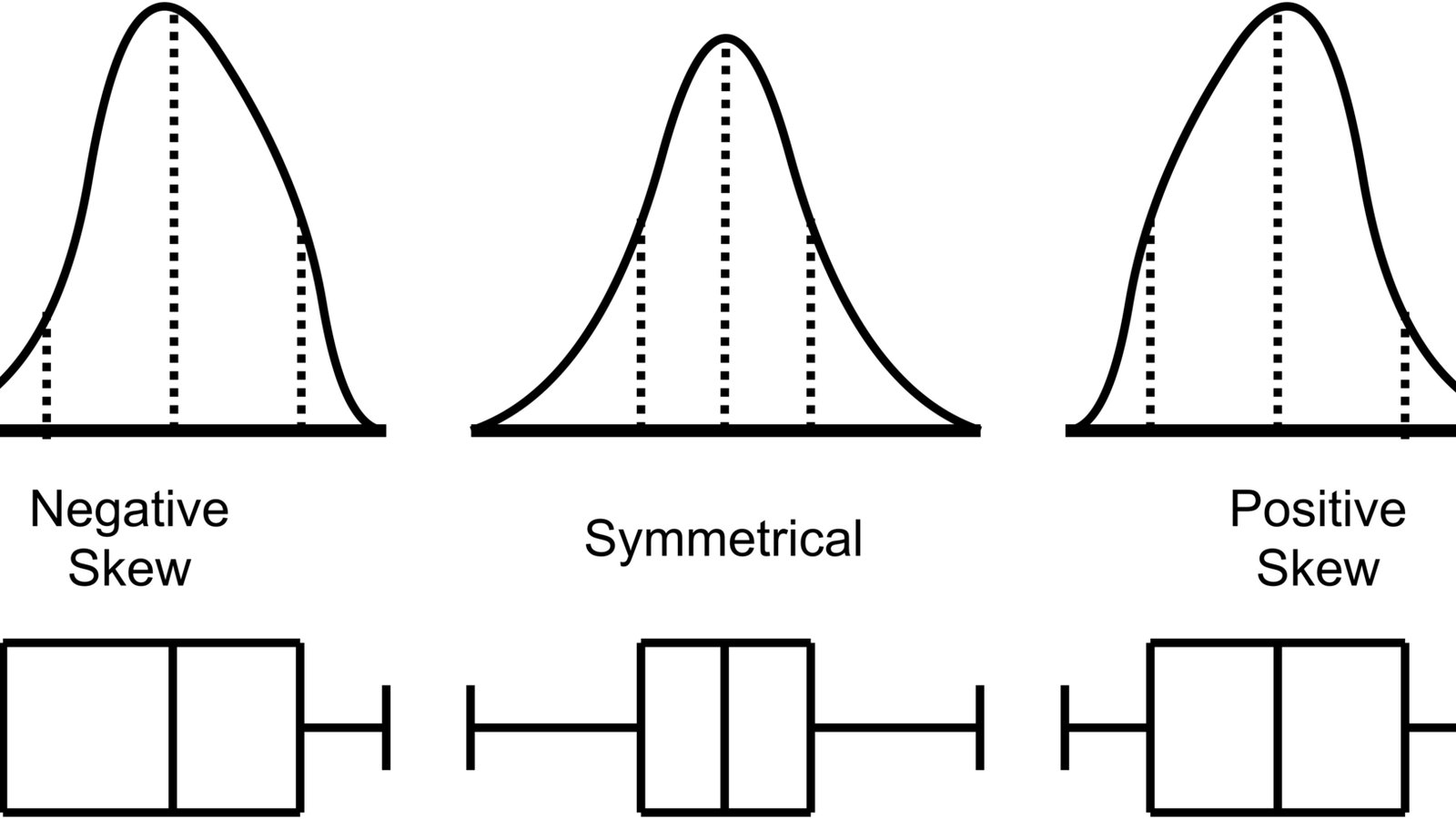
The Rich Get Richer: The Physics of Wealth Distribution and Inequality
The rich are getting richer while the poor remain poor. This article dives into the physics-based models that explain the inherent inequality in wealth distr...
Read article
Emmy Noether: Revolutionizing Abstract Algebra and Theoretical Physics
Emmy Noether’s work in algebra and physics established her as a pioneer, particularly through her groundbreaking theorem linking symmetries to conservation l...
Read article
Mary Somerville: Pioneer in Astronomy and Mathematical Physics
Mary Somerville's work in astronomy and mathematical physics earned her recognition as one of the first female scientists, making complex scientific concepts...
Read article
Understanding the Connection Between Correlation, Covariance, and Standard Deviation
This article explores the deep connections between correlation, covariance, and standard deviation, three fundamental concepts in statistics and data science...
Read article
Mary Jackson: NASA's First Black Female Engineer and Advocate for Diversity
Mary Jackson was NASA's first Black female engineer and a trailblazer in aerospace engineering. Her dedication to diversity and inclusion made her an advocat...
Read article