Topics
Supply chains have become more complex and interconnected, making optimization essential for modern businesses. In this landscape, data science is revolutionizing the way companies manage their supply chains and industrial networks. By applying advanced techniques such as machine learning, predictive analytics, and graph theory, businesses can streamline their operations, forecast demand more accurately, and improve decision-making across the supply chain.
In this article, we will explore how data science drives supply chain optimization and industrial network analysis, and how these methods can be used to maximize efficiency, reduce costs, and enhance overall performance.
The useful framing is that supply chain analytics has three layers: prediction, optimization, and execution. Forecasting demand is valuable, but the value appears only when it changes purchase orders, inventory policies, routing plans, or production schedules. The analytical model and the operational process must be designed together.
Understanding Supply Chain Optimization
What is Supply Chain Optimization?
Supply chain optimization refers to the process of improving the efficiency and effectiveness of a supply chain by fine-tuning processes such as production, transportation, and inventory management. The goal is to ensure that goods flow smoothly from suppliers to customers while minimizing costs and maximizing customer satisfaction. Key metrics in supply chain optimization include:
- Cost Efficiency: Reducing operational costs such as transportation, warehousing, and inventory.
- Lead Time Reduction: Decreasing the time it takes for goods to move through the supply chain.
- Service Levels: Meeting customer demand without delays or stockouts.
- Resilience: Maintaining acceptable service when suppliers, ports, machines, or routes fail.
- Working Capital: Balancing safety stock against cash tied up in inventory.
Historical Approaches vs. Modern Approaches
Linear programming, network optimization, heuristics, and simulation have long been used for proactive planning. Modern data systems add faster state estimation, richer forecasts, and more frequent re-optimization; they do not replace the underlying operations-research models.
The integration of data science has transformed supply chain optimization by enabling predictive and prescriptive analytics. Businesses can now forecast demand, predict potential disruptions, and proactively optimize their operations. This shift from reactive to proactive decision-making allows companies to better anticipate market changes and improve their overall performance.
Data Science in Supply Chain Optimization
Data Collection in Supply Chains
The foundation of data-driven supply chain optimization is accurate and comprehensive data collection. Modern supply chains generate vast amounts of data from multiple sources, including:
- Enterprise Resource Planning (ERP) Systems: Capturing data on inventory levels, orders, and production schedules.
- IoT Devices: Sensors and RFID tags that provide real-time data on shipments, machinery, and assets.
- Customer Demand Data: Data from e-commerce platforms, point-of-sale systems, and market trends.
Collecting and analyzing this data in real-time enables companies to optimize their supply chains dynamically, adjusting to fluctuations in demand, supplier delays, or logistical issues.
Predictive Analytics in Supply Chain Optimization
Predictive analytics allows businesses to forecast future demand, optimize resource allocation, and anticipate potential disruptions. By analyzing historical data, predictive models can uncover patterns and trends that help businesses prepare for future events. Common techniques in predictive analytics include:
- Time-Series Forecasting: Using methods such as moving averages or ARIMA models to predict demand based on past data.
- Statistical and machine-learning forecasting: compare seasonal-naive, exponential-smoothing, regression, tree-based, and neural approaches under the same horizon and loss. Complexity should be earned by held-out performance.
Predictive analytics enables businesses to reduce the risk of stockouts, minimize excess inventory, and improve customer satisfaction by meeting demand more effectively.
Optimization Algorithms and Machine Learning Models
Data science introduces sophisticated optimization techniques to improve logistics, resource allocation, and production processes. These algorithms can range from traditional methods like linear programming to more advanced techniques such as genetic algorithms and deep reinforcement learning.
- Linear Programming: Useful for solving transportation and logistics problems by minimizing costs while meeting constraints like delivery time and capacity.
- Mixed-integer and network optimization: model discrete facility, routing, scheduling, and capacity decisions explicitly when the structure is known.
- Heuristics/metaheuristics: useful when exact combinatorial optimization is too expensive, but they require benchmark bounds or strong baselines.
- Reinforcement learning: potentially useful for sequential decisions when a credible simulator or abundant interaction data exists; it is not a generic replacement for inventory-control theory.
Prescriptive Analytics in Supply Chains
While predictive analytics forecasts future events, prescriptive analytics recommends the best course of action. By running what-if scenarios, businesses can test various strategies and choose the most effective one. For example, if demand is expected to spike, prescriptive models can suggest how to reallocate resources, adjust production levels, or modify logistics plans to handle the surge.
Industrial Network Analysis
What is Industrial Network Analysis?
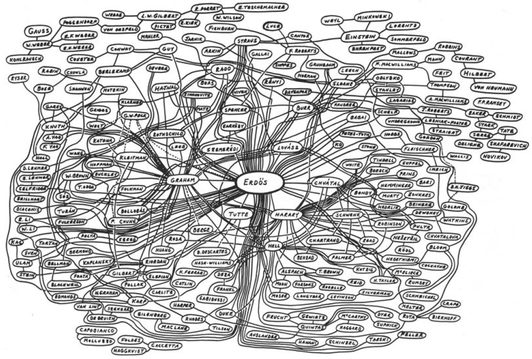
Industrial network analysis focuses on understanding and optimizing the complex relationships and interactions between different components of a production or distribution network. It involves modeling a supply chain as a graph, where nodes represent factories, warehouses, or suppliers, and edges represent transportation routes or communication links.
Graph Theory in Industrial Network Analysis
Graph theory is central to industrial network analysis by helping businesses model and analyze the structure of their supply chains. This allows companies to optimize routes, identify bottlenecks, and improve the overall flow of goods. Key concepts in graph theory include:
- Shortest Path Algorithms: Algorithms such as Dijkstra’s algorithm help find the most efficient transportation routes, reducing delivery times and costs.
- Max Flow-Min Cut Theorem: This algorithm optimizes the flow of materials or goods through a network, identifying bottlenecks and ensuring efficient resource allocation.
Applications of Network Analysis in Production Systems
Network analysis can be applied to various aspects of production and distribution, including:
- Bottleneck Identification: By mapping out the flow of goods, companies can pinpoint areas where delays or inefficiencies occur and take corrective action.
- Resource Allocation: Optimizing the distribution of resources across the network ensures that production and logistics run smoothly.
- Supply Chain Optimization: Network analysis can help businesses redesign their supply chains to minimize costs and lead times while maximizing service levels.
Practical Applications of Data Science in Supply Chain Networks
IoT and Real-Time Data Analytics
The Internet of Things (IoT) has transformed supply chain management by providing real-time data on every aspect of the supply chain. Sensors, RFID tags, and GPS trackers allow companies to monitor shipments, track inventory levels, and detect potential issues in real-time. This data can then be analyzed using data science techniques to optimize operations on the fly.
If a shipment delay is detected, a routing or scheduling optimizer can recompute feasible plans using current capacities, costs, contractual constraints, and service requirements.
Big Data and Supply Chain Visibility
Big data technologies provide the ability to process and analyze vast amounts of data from multiple sources, giving businesses end-to-end visibility across their supply chains. This visibility is critical for ensuring that goods are moving efficiently and that potential issues are identified before they escalate. For instance, predictive maintenance models can analyze sensor data from machinery to detect early signs of failure, allowing companies to perform maintenance before a breakdown occurs.
Evidence should be decision-specific
The previous version used generic Amazon and Walmart examples without sources or reproducible performance measures. A stronger case study states the optimization problem, baseline policy, decision horizon, constraints, and measured outcome. For inventory, for example, report service level, fill rate, holding cost, stockouts, and working capital rather than saying that “predictive analytics improved inventory.”
Challenges and Future Directions
Challenges in Implementing Data-Driven Supply Chain Optimization
While data science offers immense potential for supply chain optimization, there are several challenges to consider:
- Data Integration: Supply chain data often comes from multiple sources with different formats, making it difficult to integrate and analyze in real-time.
- Scalability: As supply chains grow larger and more complex, the computational power required to process data and optimize operations increases.
- Real-Time Processing: Analyzing large datasets in real-time requires fast processing and decision-making, which can be challenging in high-volume environments.
- Incentive Misalignment: Procurement, logistics, finance, and sales may optimize different metrics unless the objective function is explicit.
- Model Trust: Planners need explanations for recommendations, especially when the model suggests expensive inventory or routing changes.
Operating Model for Analytics Teams
A strong supply chain analytics function should maintain:
- a shared data model for orders, inventory, capacity, lanes, suppliers, and service levels;
- forecasting baselines for demand, lead time, and disruption probability;
- optimization models with clearly documented constraints and business priorities;
- scenario planning workflows for shocks such as supplier failure or demand spikes;
- post-decision measurement that compares recommended plans with actual outcomes.
Future Trends in Data Science for Supply Chains
Looking to the future, several trends are expected to shape supply chain optimization:
- Decision automation with controls: more planning decisions can be automated, but safety stocks, contractual commitments, exception handling, and human escalation remain part of the operating model.
- Traceability: distributed ledgers can preserve a record, but they do not verify whether upstream measurements or declarations were correct.
- Digital Twins: A digital twin is a virtual representation of a physical supply chain that allows companies to simulate and optimize their operations in real-time. Digital twins can help businesses test different strategies and identify potential issues before they occur.
Conclusion
Supply chain optimization and industrial network analysis are critical components of modern business operations, and data science is central to enhancing their effectiveness. By leveraging techniques such as predictive analytics, machine learning, and graph theory, businesses can optimize their supply chains, reduce costs, and improve customer satisfaction. As data science continues to evolve, the future of supply chains will be increasingly smart, connected, and data-driven, empowering businesses to thrive in a competitive global marketplace.
The strongest supply chain systems are not simply automated. They are observable, stress-tested, and designed so planners can understand why a recommendation changed. That combination of optimization and human oversight is what turns analytics into reliable operational advantage.
References
- Chopra, S., & Meindl, P. (2019). Supply Chain Management: Strategy, Planning, and Operation (7th ed.). Pearson.
- Simchi-Levi, D., Kaminsky, P., & Simchi-Levi, E. (2021). Designing and Managing the Supply Chain (4th ed.). McGraw Hill.
- Ahuja, R. K., Magnanti, T. L., & Orlin, J. B. (1993). Network Flows: Theory, Algorithms, and Applications. Prentice Hall.
- Snyder, L. V., & Shen, Z.-J. M. (2019). Fundamentals of Supply Chain Theory (2nd ed.). Wiley.
Forecasts and decisions should be evaluated jointly
A forecast with lower RMSE is not automatically better for inventory. If replenishment uses an order-up-to policy, what matters is the induced distribution of stockouts, service level, holding cost, and expediting cost. The analytical chain is
Evaluate the full chain whenever possible.
Embed interactive plots, widgets, and demos using <figure>, <iframe>, or <div class="interactive-embed"> containers. Ensure each embed includes descriptive captions for accessibility.
How to cite
Use the quick export buttons to save citations for reference managers or copy the formatted text directly.
Diogo Ribeiro (2021). Supply Chain Optimization and Industrial Network Analysis Using Data Science. Faculty of Media Arts and Design, Technical University of Porto. https://diogoribeiro7.github.io/mathematics/suply_chain/.