Topics
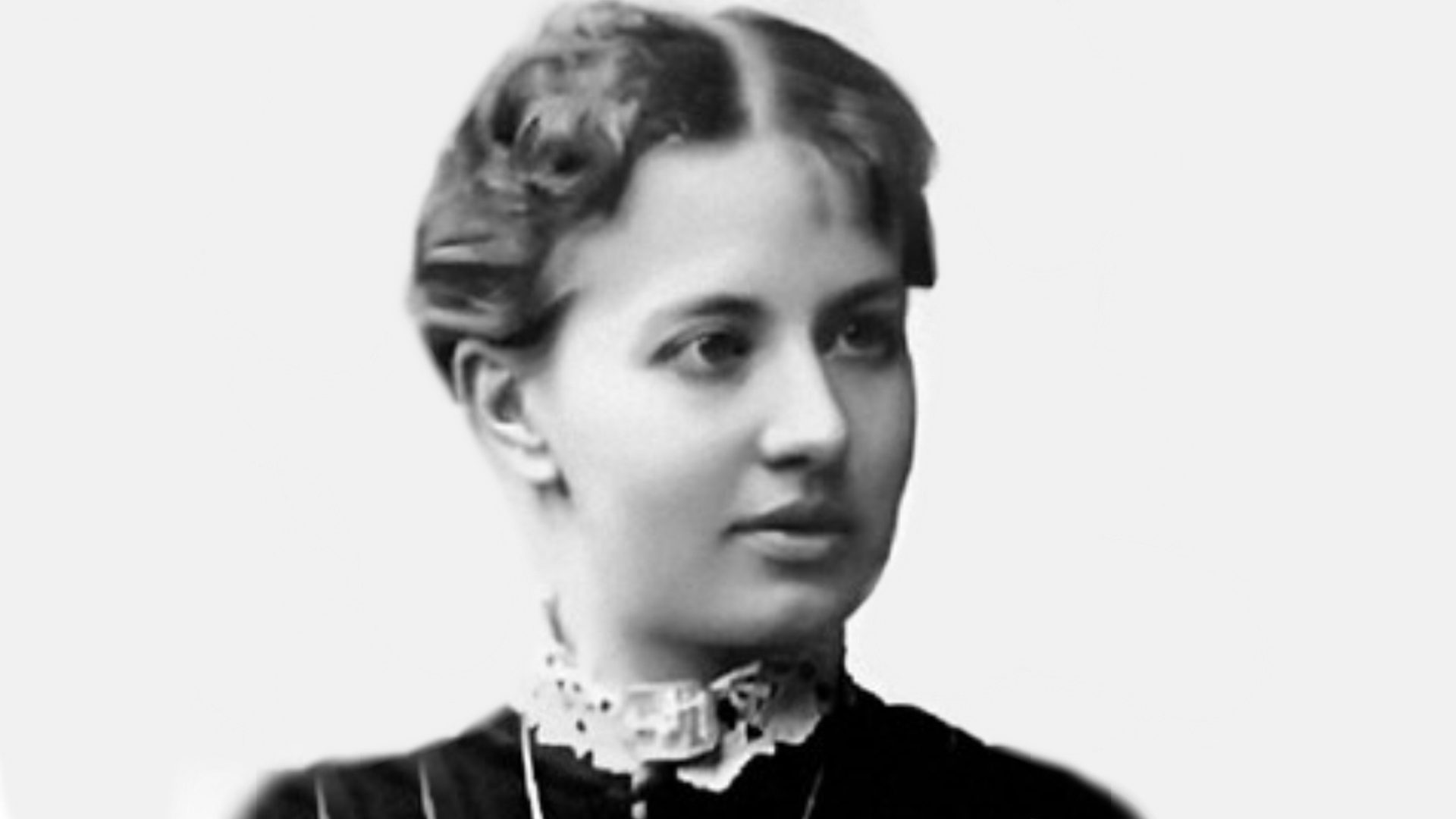
Sophie Germain
Sophie Germain (1776–1831) worked in two areas that look very different today: number theory and the mathematical theory of elastic plates. Her career was shaped by exclusion from formal mathematical education, but the important historical point is not only that she persisted. She produced mathematics that other mathematicians used.
Learning mathematics outside the institutions
Germain was born in Paris in 1776. Women could not enroll as students at the newly founded École Polytechnique. She nevertheless obtained lecture material and submitted work under the name M. LeBlanc, a pseudonym also used in her correspondence with Joseph-Louis Lagrange and later Carl Friedrich Gauss. The famous story that Lagrange discovered the identity behind the pseudonym after being impressed by submitted work appears in standard historical accounts.
What is certain is that Germain developed sustained mathematical correspondence with leading mathematicians despite lacking the institutional access available to male contemporaries.
Correspondence with Gauss
Germain wrote to Gauss about number theory under the name M. LeBlanc. Her identity became known to him after events connected with the French occupation of Brunswick, when Germain intervened through a family acquaintance to try to protect Gauss. Gauss later praised her mathematical ability explicitly. The correspondence matters because it documents that her work was not an isolated private hobby.
She was participating directly in contemporary number theory.
Fermat's Last Theorem
For integer exponent $p>2$, Fermat's Last Theorem asks whether
can have nonzero integer solutions. Germain developed an auxiliary-prime strategy for excluding large classes of possible solutions. A prime of the form
is now called a Sophie Germain prime when both $p$ and $q$ are prime. Her broader method used auxiliary primes satisfying modular conditions that forced divisibility constraints on any hypothetical solution. One important consequence became known as Sophie Germain's theorem. In modern language, her work established the first case of Fermat's Last Theorem for many prime exponents under explicit conditions.
The “first case” means excluding solutions in which the exponent $p$ divides none of
This was substantial progress. It was not a proof of Fermat's Last Theorem, and it was not an entry in the Paris Academy elasticity competition. The earlier version of this article incorrectly merged those two parts of her career.
Why the auxiliary-prime idea mattered
The strength of Germain's method was structural. Instead of trying to solve
directly, she asked what such a solution would imply modulo carefully chosen auxiliary primes. This changed the problem from an unrestricted integer equation into a collection of modular constraints. That style of reasoning became central to later work on Fermat-type equations. Germain's results did not directly lead to Andrew Wiles's 1990s proof in a simple historical chain.
Wiles's proof used elliptic curves, modular forms, and the modularity theorem, a very different framework. Germain's importance lies in the mathematics she actually developed in the nineteenth-century theory of the problem.
Chladni figures and vibrating plates
Germain's second major research program began with a Paris Academy competition inspired by Ernst Chladni's experiments on vibrating plates. Chladni showed that sand sprinkled on a vibrating plate collects along nodal lines, creating geometric patterns. The challenge was to derive a mathematical theory explaining the vibrations. This was a difficult problem in elasticity and partial differential equations.
Germain entered the competition repeatedly. Her first submission did not win. A later submission received an honorable mention. After further revision, her third memoir was awarded the Academy's prize in 1816. That prize was for the theory of vibrating elastic surfaces, not for Fermat's Last Theorem.
The plate equation
The modern small-deflection equation for a thin elastic plate is commonly written in a form involving the biharmonic operator,
where $w$ is displacement, $D$ is flexural rigidity, $\rho$ is density, and $h$ is thickness. Germain's own formulation preceded the mature modern theory and contained limitations. Her work should therefore not be described as having single-handedly established the final theory of elasticity. Its importance is historical and mathematical: she persisted on a genuinely difficult variational and PDE problem, obtained the Academy prize, and contributed to the development of plate theory.
Recognition and limitations of access
Germain did not hold a university position. She was excluded from many institutional forms of mathematical life. After her work on elasticity, however, she became the first woman who was not a member's wife to be permitted to attend sessions of the Institut de France. Her career illustrates how mathematical ability and institutional recognition can be very different things.
That should be stated without turning every historical detail into a story of individual heroism. The exclusion was structural.
Later recognition
The Prix Sophie Germain, awarded by the Fondation Sophie Germain through the Institut de France, now bears her name. Her name is also attached to Sophie Germain primes and to results in number theory. Those are more durable forms of mathematical memory than generic claims that she “paved the way” for every later woman in mathematics.
Conclusion
Germain's mathematical career had two distinct centers. In number theory, she developed an auxiliary-prime method that produced strong partial results on Fermat's Last Theorem. In mathematical physics, she worked for years on the theory of vibrating elastic plates and won the Paris Academy prize. The historical record is stronger when those achievements are described precisely rather than merged into one inspirational narrative.
References
- Gray, M. W. (2005). Sophie Germain. In Women of Mathematics: A Biobibliographic Sourcebook. Greenwood Press.
- Laubenbacher, R., & Pengelley, D. (2010). Sophie Germain's grand plan to prove Fermat's Last Theorem. Historia Mathematica, 37(4), 641–692.
- MacTutor History of Mathematics. Sophie Germain.
- Bucciarelli, L. L., & Dworsky, N. (1980). Sophie Germain: An Essay in the History of the Theory of Elasticity. D. Reidel.
Embed interactive plots, widgets, and demos using <figure>, <iframe>, or <div class="interactive-embed"> containers. Ensure each embed includes descriptive captions for accessibility.
How to cite
Use the quick export buttons to save citations for reference managers or copy the formatted text directly.
Diogo Ribeiro (2019). Sophie Germain: Number Theory and Elasticity. Faculty of Media Arts and Design, Technical University of Porto. https://diogoribeiro7.github.io/biographies/sophie_germain_pioneer_in_number_theory_and_elasticity/.